
The Rescue: Turning Around a High-Volume QSR
The Situation: $9,000 Monthly Loss
The location was bleeding cash. Labor costs were fluctuating wildly, and food waste was high because the "prep-to-sales" ratio was off. The store was running on autopilot with no oversight on the daily numbers.
The "Boots on the Ground" Audit: Operational Reality
I spent months working every position on every shift to bridge the gap between digital data and real-time restaurant floor realities.
1. Sales-Based Labor "Flexing"
The Observation: In fast food, the mid-afternoon slump is a profit-killer where labor costs often skyrocket while staff stands idle.
T
he Fix: I pulled hourly sales reports to identify the exact minute the lunch rush decayed. I implemented a "Flex-Cut" system—empowering managers to send secondary staff home the moment ticket volume slowed, rather than waiting for a static schedule-end.
The Goal: Drive labor costs down from 45% to a lean 30% by matching headcount to actual real-time demand.
2. Yield & Prep Management (Waste Control)
The Observation: Profit was literally being thrown in the trash due to over-prepping and a lack of portion control.
The Fix: I overhauled the daily Prep Sheets to be dynamic. I tied prep levels to Projected Sales for each specific day of the week—eliminating the mistake of prepping "Friday volume" on a "Tuesday morning."
The Result: We tightened the yield on high-use proteins and sides, cutting food waste significantly within the first 60 days.
3. Streamlining the Line (Throughput Optimization)
The Observation: Physical bottlenecks at the window and counter were capping our revenue potential during peak hours.
The Fix: I reorganized the physical layout of the "Line" to reduce unnecessary steps for the crew and set Strict Target Ticket
Times. * The Result: Faster service meant higher volume during peak hours. We increased throughput without the need to add additional staff.
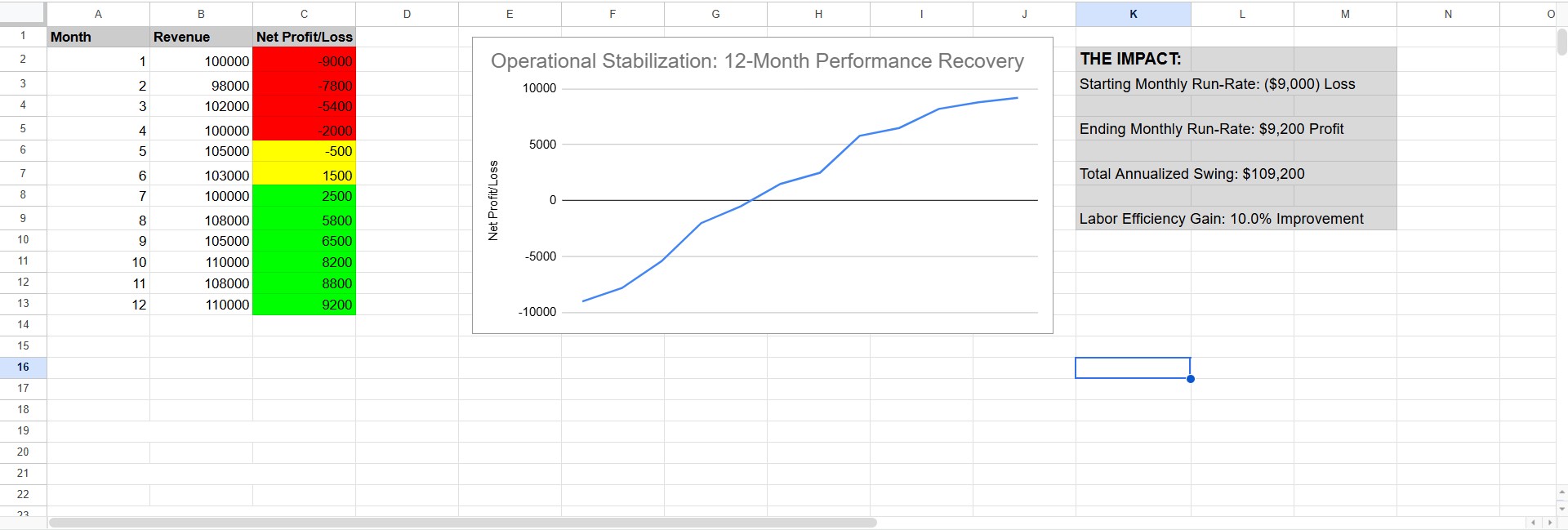
The Results: The Recovery Curve
This is the data from the 6-month turnaround. We stopped the "bleed" and stabilized the operation.
737-202-5325