
Beyond the P&L: The Operational Blueprints
The Strategy: Data-Driven Floor Management
High-volume operations move too fast for "gut feelings." These blueprints are designed to bridge the gap between 30 years of hospitality experience and modern data architecture. The goal isn't to generate more reports—it’s to provide decision-making engines that work in the heat of a shift.
The Targets: Why These Metrics?
Labor Stabilization: In an industry where labor can quickly hit terminal levels, these monitors are built to pull costs back to the 30% industry standard by identifying "burn" before the shift ends.
Revenue Safeguards: 86’d items and inventory gaps aren't just logistics issues; they are guest experience failures. Real-time tracking allows for immediate FOH pivots to protect the average check.
Operational Continuity: Reputation is often lost in the "Dead Zones" of shift changes. This system creates accountability during transitions to ensure the standard never drops.
The Philosophy: Proactive vs. Reactive
"You can’t manage what you can’t see. Most traditional reporting is a rearview mirror—it tells you why you lost money last month. These systems are the windshield; they provide the clarity needed to pivot and protect the margin before the shift goes sideways."
The Tactical View: Shift Hand-Off & Labor Risk
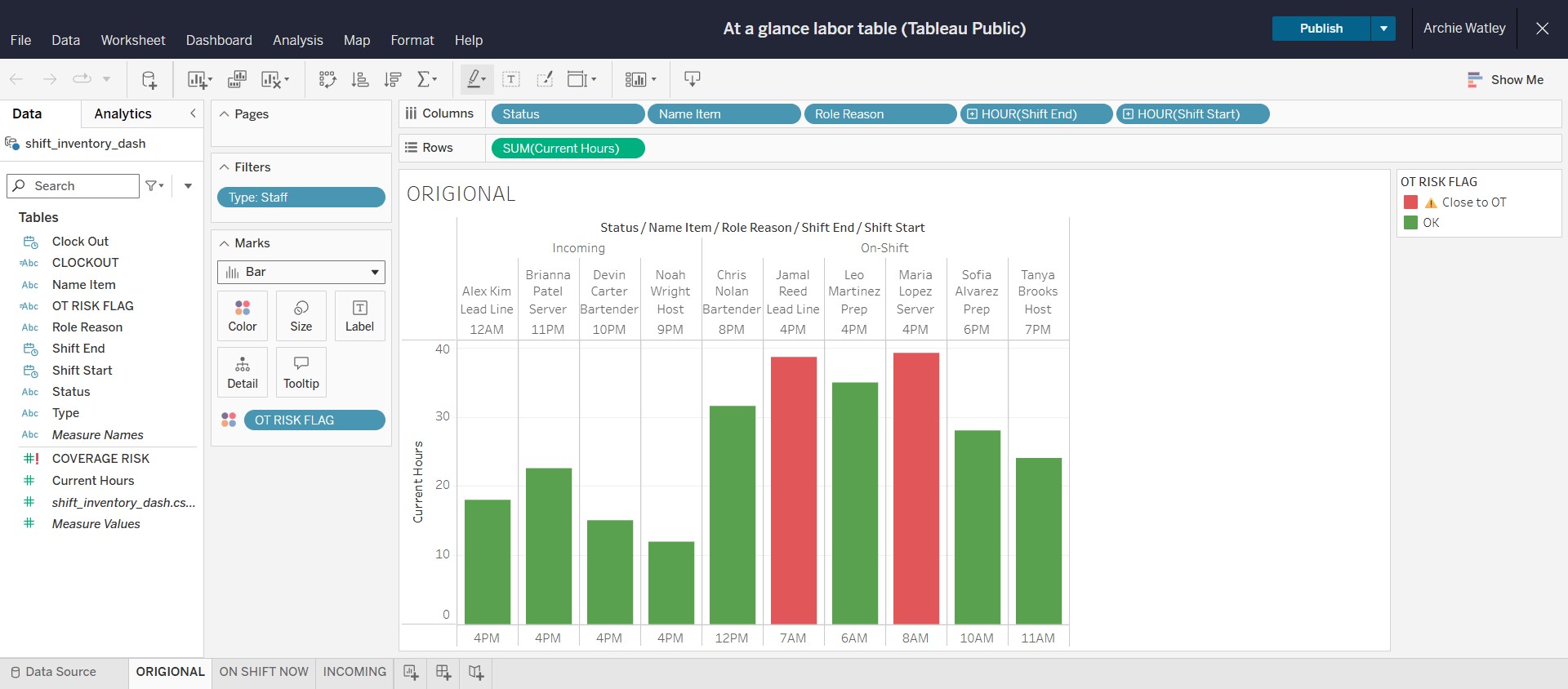
These three modules work in tandem to eliminate the "Transition Gap" between shifts. By syncing current staff data with incoming relief, a manager can make "Cut or Keep" decisions with 100% financial certainty.
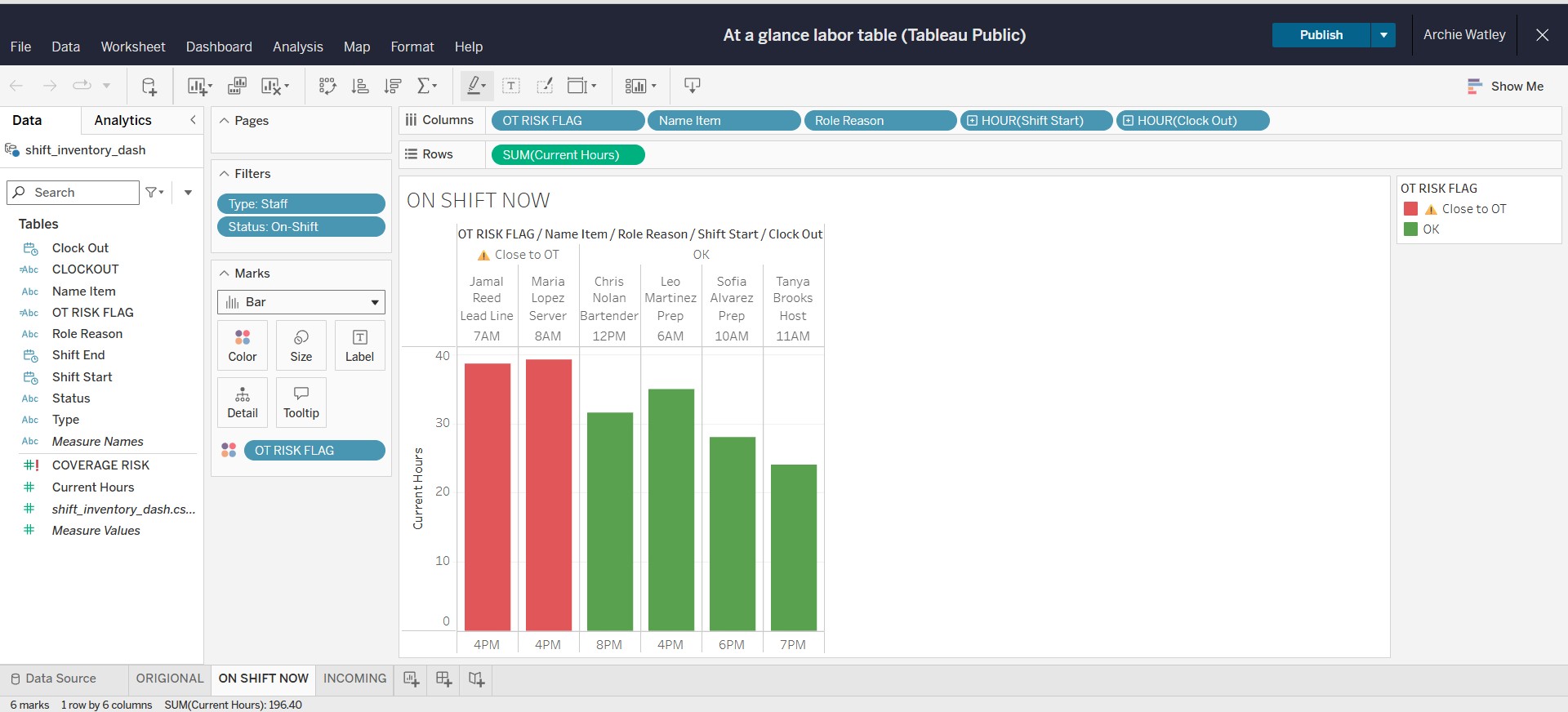
The On-Shift Monitor: Real-time visibility of who is currently on the floor and their assigned roles.
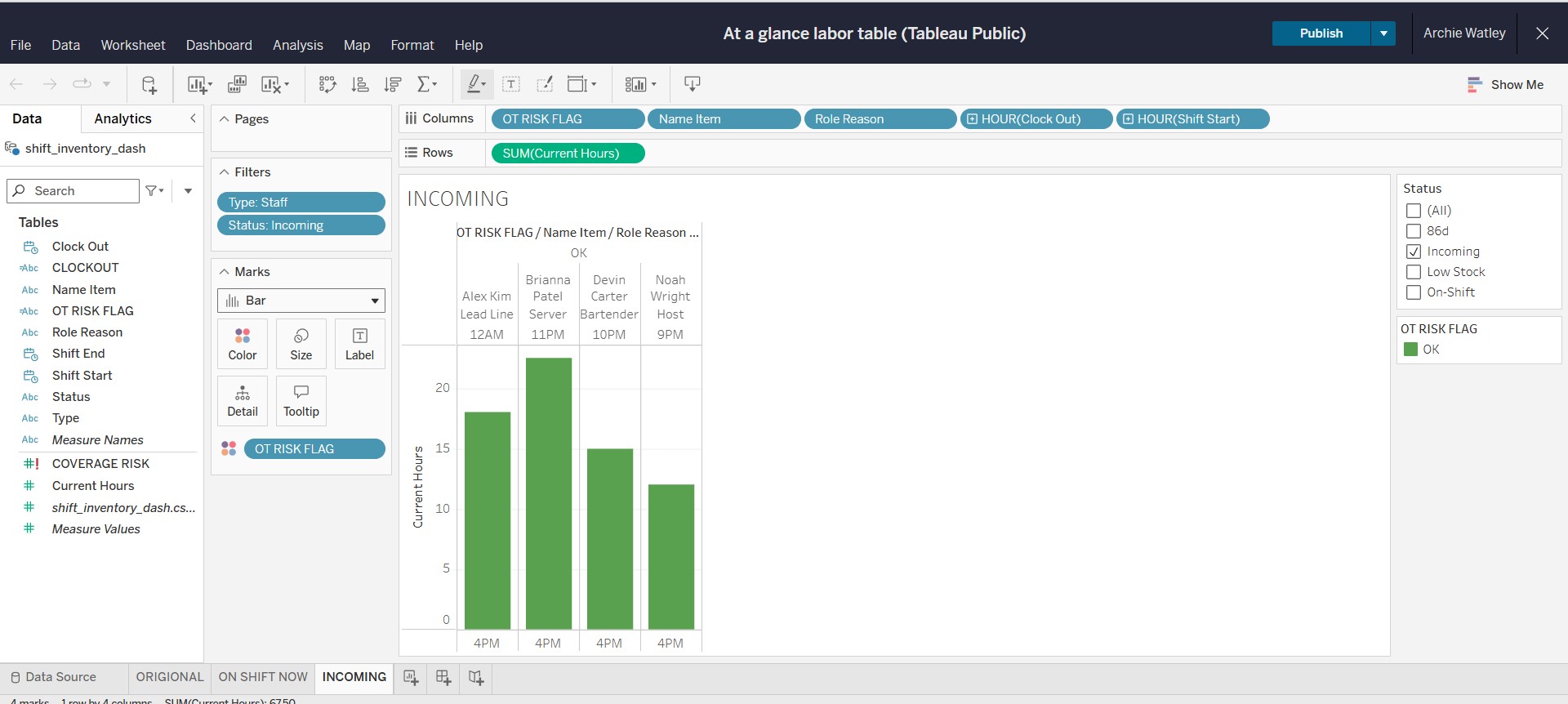
The Incoming Queue: A "Look-Ahead" at the next wave of labor to ensure seamless station hand-offs.
The OT Risk Alert: Automatically flags employees approaching 40 hours. Red highlights indicate a mandatory cut or a shift-swap requirement to protect the weekly labor budget.
Full Roster & OT Accumulation Audit
Live Deployment: On-Shift Personnel
Strategic Relief: Incoming Shift Queue
737-202-5325